Luis Soriano is a primary school teacher in La Gloria, a small town in the Magdalena region of northern Colombia. In the late 1990s, he looked at the children scattered through the remote villages around his town — farm kids who walked for hours to school, if they went at all — and he saw the same problem everywhere: there were no books. No libraries, no bookshops, often not a single storybook in the house. And Soriano believed, with his whole heart, that a child without books is a child robbed of a future.
Alfa and Beto
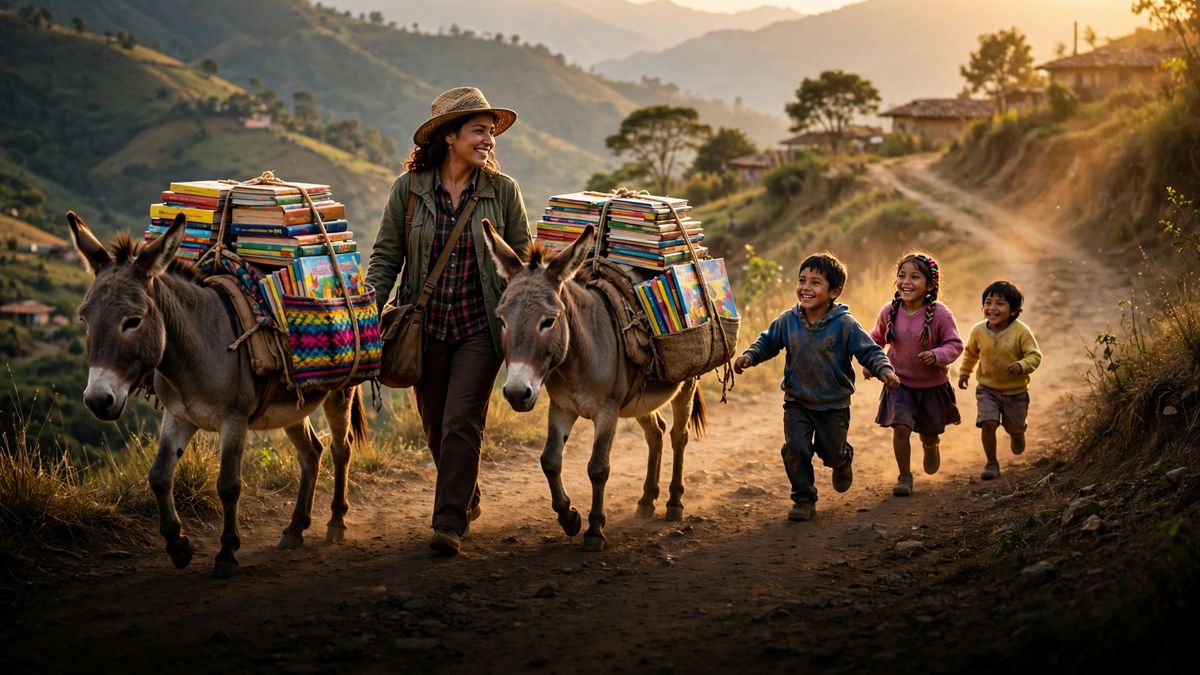
So he built a library that could walk. Soriano loaded around seventy of his own books onto the backs of his two donkeys and set out along the dusty tracks to the villages. The donkeys' names were his private joke and his whole philosophy in one word: Alfa and Beto — put them together and you get alfabeto, the Spanish word for alphabet. The Biblioburro — the Donkey Library — was born.
Every Saturday, Soriano rides out, sometimes for hours in fierce heat, to hamlets where children now run to meet him. He reads to them under the trees, helps with homework, lends books to take home, and listens to the stories the children write themselves. Word spread. Donations of books arrived from across Colombia and beyond, and the traveling collection grew from seventy volumes to some 4,800.
Danger on the trail
It has never been safe or easy. Soriano travels through countryside long troubled by armed groups; he has been robbed on the trail, and once, bandits tied him to a tree and took what he was carrying. He has been thrown from a donkey and badly hurt. He kept going. Eventually he built a small library building in La Gloria too — with donated books, and a home for the reading program that the donkeys made famous.
"A book can change a life," Soriano says in essence, every time he saddles up. In villages where violence once ruled, he wants children armed with stories instead.
What a donkey can carry
Over the years, the Biblioburro has reached tens of thousands of children. Soriano's work has been honored in Colombia and told around the world — in documentaries, in a beloved children's picture book, and in the memories of grown men and women in tiny villages who still remember the day the library came clopping down their road.
How the donkey library works
A Biblioburro visit follows a rhythm the children know by heart. The donkeys arrive wearing their painted sign — "Biblioburro" — and the books are spread out on blankets in the shade. Soriano reads a story aloud first, voices and all, because many of his listeners are only just learning to read. Then come the lending, the homework help, and the children's favorite part: telling Don Luis what happened in the books they borrowed last time. Attendance at his school lessons rose in village after village, teachers reported, because children who read for joy start reading for everything. Soriano's dream, as he has put it, is that no child in his region should grow up without holding a book — and his little institution, begun with two donkeys and seventy books, has inspired traveling libraries on donkeys, mules and motorcycles in other parts of the world. The idea is contagious because it is so simple: if the children cannot come to the books, bring the books to the children.
There is something perfect about the image: no truck, no budget, no grand institution — just a teacher who refused to accept that the children in the hills should grow up without stories, and two patient donkeys carrying the whole world, a few books at a time.