In 2005, Miguel Guzmán of Villa Carlos Paz, a town in the hills of Córdoba, Argentina, brought home a German Shepherd mix puppy — a gift, originally, for his teenage son. The dog, named Capitán, attached himself completely to Miguel. A year later, in March 2006, Miguel died suddenly. Capitán was at home when it happened. What happened next, no one in the family has ever been able to explain.
The dog who found the way
Soon after the funeral, Capitán disappeared from the house. The family searched and eventually gave him up for lost — or assumed he had found a new home. Then, about a week later, they visited Miguel's grave at the municipal cemetery and found the dog there, whimpering beside it. He had not been at the funeral. No one had ever taken him to that cemetery, across town from the family home. Somehow — by scent, by instinct, by whatever compass a dog's heart carries — Capitán had tracked down the one spot in the world where his person lay, and taken up his post.
When the family tried to bring him home, Capitán would not stay. He kept returning to the cemetery. So the family, and then the cemetery staff, let him be. His vigil had begun.
Eleven years of nights
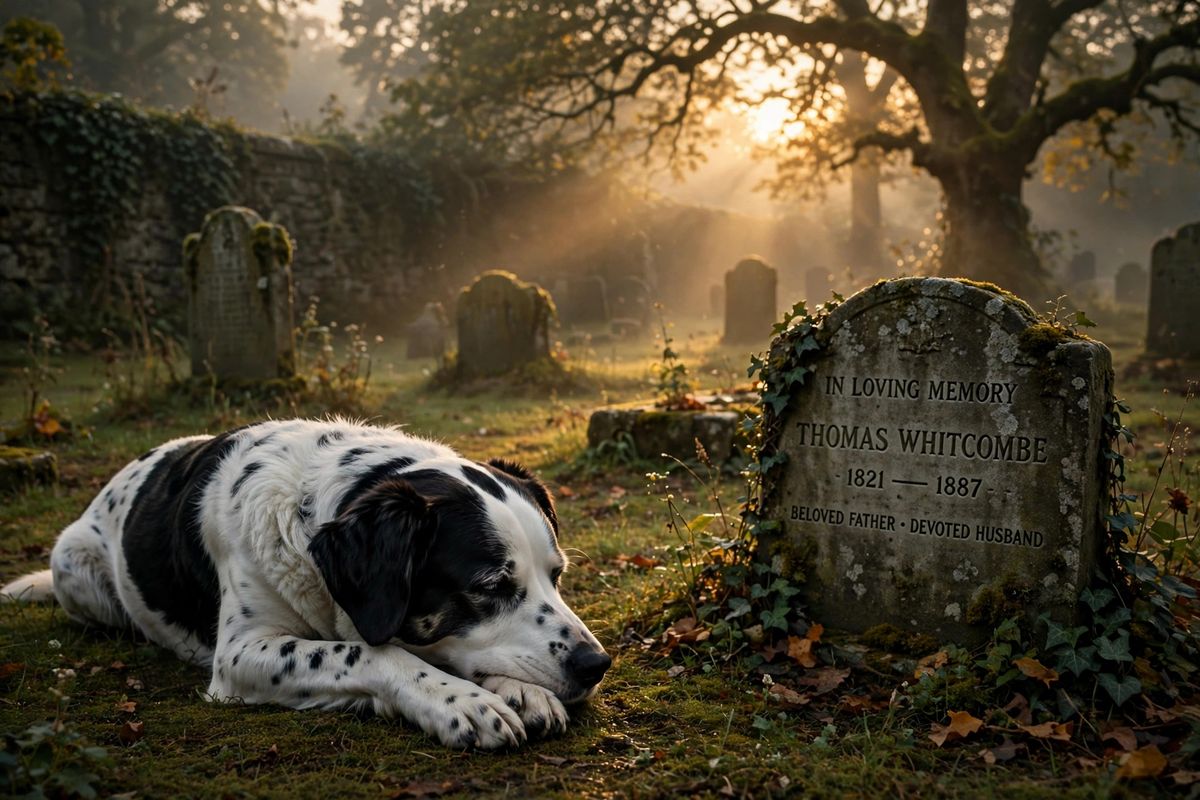
For the next eleven years, Capitán lived at the cemetery. By day he wandered its paths, a familiar, gentle presence among the graves, fed and cared for by the groundskeepers who adopted him as their own. But every evening, at around six o'clock, he made his way to Miguel's grave — and there he lay down, and there he slept, through summer heat and winter cold, year after year. The cemetery's director told reporters that the most astonishing part was the beginning: the dog arrived alone, the first time, and found the grave of the master he adored entirely by himself.
As he aged, Capitán grew grey and slow; a kidney condition weakened him, and in his last years he could barely climb the small rise to the grave. He went anyway. The whole town knew him. Children grew up visiting the loyal dog at the cemetery the way other towns' children visit a statue.
People offered Capitán homes. He had one. It was a patch of ground in a cemetery in Córdoba — because that was where his person was.
Together again
Capitán died in February 2018, at about fifteen years old — in the cemetery, close to the grave he had guarded for eleven years. The town mourned him openly; there was talk of a monument, and his ashes, locals said, should rest near Miguel. A dog who could have lived anywhere chose, for more than a decade, to sleep each night on a grave.
The town that adopted a mourner
Capitán's vigil could only last eleven years because a whole community quietly sustained it. Cemetery workers built their days partly around him — feeding him, sheltering him during storms, taking him to veterinarians as age and kidney trouble slowed him down. Visitors to the cemetery began asking for him by name; journalists from across Argentina and beyond made the trip to Córdoba to see the dog who slept on a grave. When he could no longer manage the walk to Miguel's plot in his final days, staff helped him stay close. After his death, neighbors and officials discussed a monument at the cemetery — a fitting plan, since Capitán had already become one without anyone's permission: a living monument, in fur and patience, to the idea that love does not end at the grave. It simply changes its address.
Scientists can argue about how Capitán found that grave — scent carried on the wind, memory, chance. The people of Villa Carlos Paz never needed an explanation. They watched a dog refuse to let death end his devotion, one night at a time, for eleven years. Some bonds, it seems, are simply stronger than goodbye.