Shavarsh Karapetyan was built for the water. The Armenian finswimmer had won seventeen world championship titles and set ten world records, moving through the water faster than almost anyone alive. On the morning of September 16, 1976, he was finishing a training run with his brother near Lake Yerevan in Armenia when he heard a crash that would define his life far more than any medal.
The bus in the lake
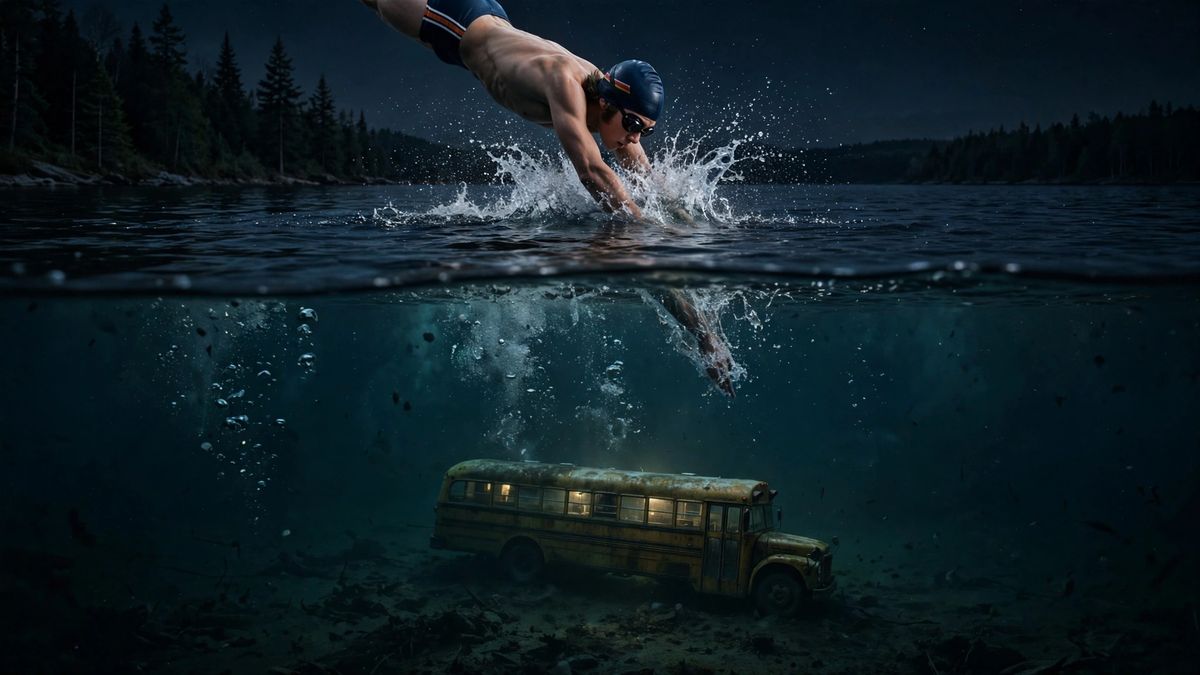
A trolleybus carrying more than ninety passengers had veered off a dam and plunged into the reservoir, sinking some ten metres — over thirty feet — to the bottom. Karapetyan ran to the shore and, without hesitation, stripped off his clothes and dived in.
The water was cold and so thick with silt and sewage that he could see nothing at all. He swam down blind, found the bus by feel, and — unable to open a door — kicked in the rear window with his legs, slicing them open on the glass. Then he began the work: down into the dark, find a body, haul it to the surface, gasp a breath, and down again. And again. And again.
Twenty trips into the black
Witnesses said he spent some twenty minutes in the water, though it must have felt like a lifetime. In that time Karapetyan brought up around thirty people; twenty of them survived. Each descent cost him more. The cold, the cuts, the exhaustion and the filthy water were destroying his body even as he refused to stop. At one point he surfaced clutching a seat cushion he had grabbed by mistake in the darkness — and he wept over the seconds it had cost, certain it had cost a life.
When it was over, he collapsed. The polluted water had infected his wounds; he developed pneumonia and blood poisoning and spent 46 days in a coma. Doctors saved his life, but his lungs were scarred forever. The fastest finswimmer in the world would never compete at the highest level again.
Asked later how he had done it, Karapetyan shrugged: he was simply the closest person who could swim. Someone had to go down.
The hero they almost forgot
In the Soviet Union of 1976, disasters were not news, and Karapetyan's rescue went almost unreported. It was years before the full story reached the public and he received the honors he deserved. Remarkably, it was not even his only rescue: in 1985 he ran into a burning building and pulled out several people, suffering burns of his own.
The morning it happened
It is worth pausing on the condition Karapetyan was in when he reached the water. He had just finished a long training run — by his own account, some twenty kilometres with a pack — when the trolleybus went off the dam. He ran to the shore already spent, tore off his shoes, and went down into water barely above ten degrees, thick with silt stirred from the bottom. The bus lay on its side on the reservoir floor. Because the window glass was his only way in, every dive began and ended with the jagged opening that was cutting his legs apart. His brother Kamo worked at the surface, taking the people Shavarsh brought up and hauling them to shore. Survivors later said the brothers never hesitated and never rested. When Shavarsh finally stopped, it was because there was no one left alive to bring up — and he could no longer feel his own body. The Soviet authorities eventually decorated him, and years later an asteroid — 3027 Shavarsh — was named in his honor. He has always ranked the twenty names he never learned above all of it.
Shavarsh Karapetyan gave up a glittering career at its peak, and he has always insisted he would do it again. Twenty families got to keep someone they loved because a champion happened to be training by a lake one morning — and decided that strangers were worth everything he had.